Where travel agents earn, learn and save!


News / Air Canada 8646 collision: New NTSB findings raise concerns over air traffic control safety
New NTSB findings on the Air Canada 8646 runway collision highlight safety gaps and raise concerns about Canada’s air traffic control systems and aviation oversight


New findings from the U.S. National Transportation Safety Board (NTSB) into the fatal Air Canada Express Flight 8646 runway collision are drawing renewed attention to air traffic control (ATC) systems and aviation safety in Canada.
The crash occurred at New York’s LaGuardia Airport when Air Canada Express Flight 8646, operated by Jazz Aviation, collided with an airport fire truck while landing, resulting in the deaths of both pilots and dozens of injuries. Investigators are now examining multiple safety and operational factors that contributed to the incident.
NTSB Findings Raise Safety Questions
According to preliminary NTSB updates, several key issues are under investigation, including air traffic control coordination, runway monitoring systems, and ground vehicle tracking technology. Officials noted that the airport’s surface detection system did not generate a timely warning, partly because the fire truck lacked a transponder, making it difficult to track its location accurately.
The collision happened shortly after the fire truck was cleared to cross an active runway while responding to a separate emergency, highlighting concerns about communication protocols and operational procedures in high-pressure situations.
Spotlight on Air Traffic Control and Staffing
The investigation has also drawn attention to air traffic control staffing and workload during overnight operations. Reports indicate that a limited number of controllers were managing multiple responsibilities at the time of the accident, raising broader questions about system resilience and safety standards.
Aviation experts say such incidents rarely result from a single failure. Instead, they typically involve a combination of technology limitations, communication breakdowns, and operational pressures that align to create a high-risk scenario.
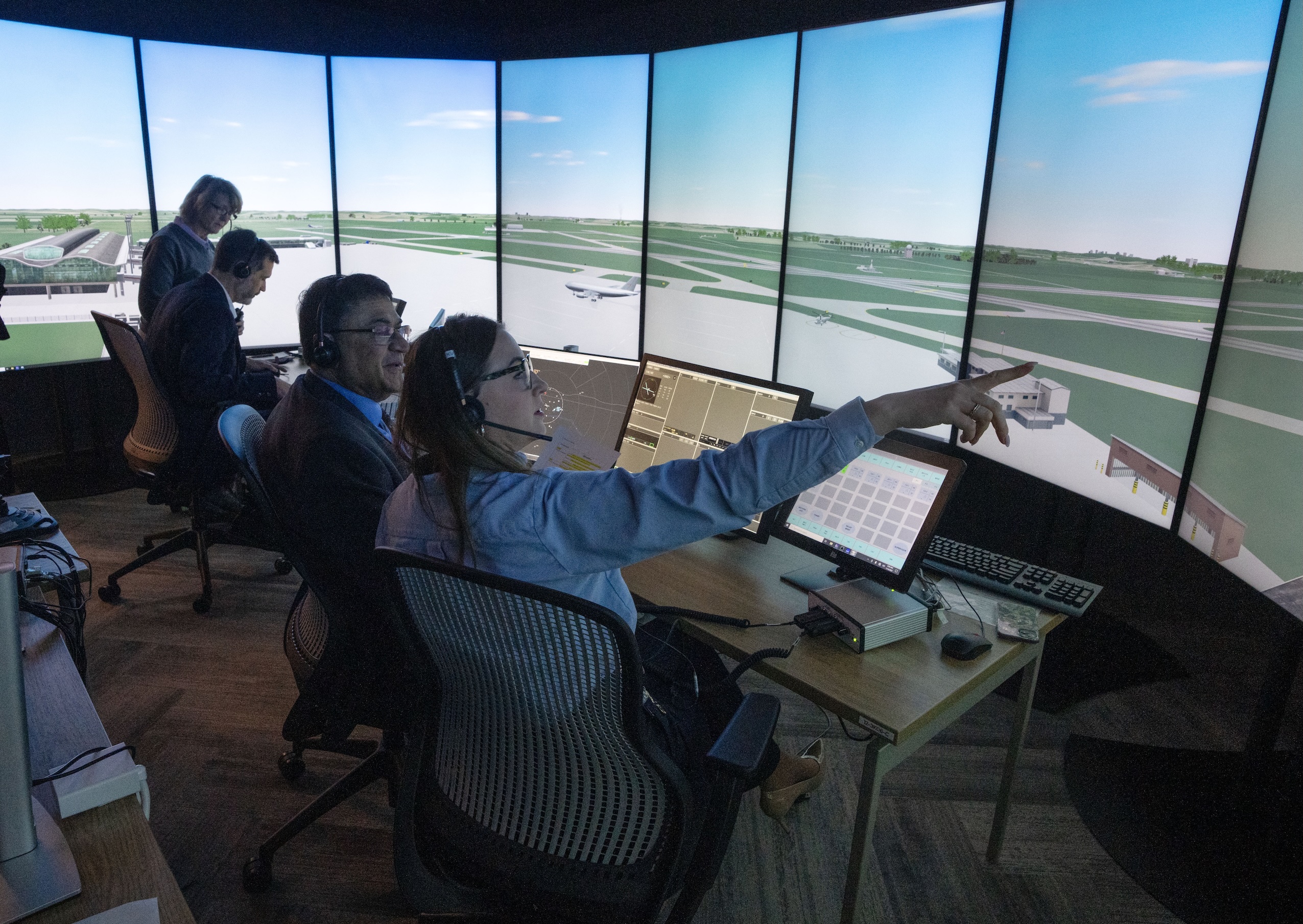
Instructor Karina Vasylenko, front, shows media how the air traffic control simulator works at the CAE training facility in Montreal, Tuesday, Jan. 14, 2025. THE CANADIAN PRESS/Ryan Remiorz
Implications for Canada’s Aviation System
Although the accident took place in the United States, the involvement of a Canadian airline and crew has put Canada’s aviation oversight and ATC practices under the spotlight. Canadian regulators and aviation authorities are closely monitoring the investigation, and the findings could influence future safety protocols and cross-border aviation coordination.
Industry observers note that the incident may lead to renewed discussions around:
- air traffic controller staffing levels
- runway incursion prevention systems
- aircraft and ground vehicle tracking technology
- international aviation safety standards
- emergency response coordination
Ongoing Investigation
The NTSB continues to analyze cockpit voice recordings, flight data, and operational procedures to determine the exact sequence of events leading to the collision. Final conclusions and safety recommendations are expected after a full review of technical data, communications, and operational decisions.
The tragedy has intensified calls for stronger safety measures and improved coordination between aviation authorities, as the industry seeks to prevent similar runway incursions in the future.
Source: Travelweek, The Associated Press, Reuters, People.com
Lead image caption: Jennifer Homendy, the NTSB chair, speaks during a press conference, March 24, 2026, at LaGuardia Airport in New York (AP Photo/Yuki Iwamura)