Where travel agents earn, learn and save!


News / Mexico launches $115 million plan to tackle sargassum
Mexico's ultimate goal: daily removal capacity of up to 4,000 tons

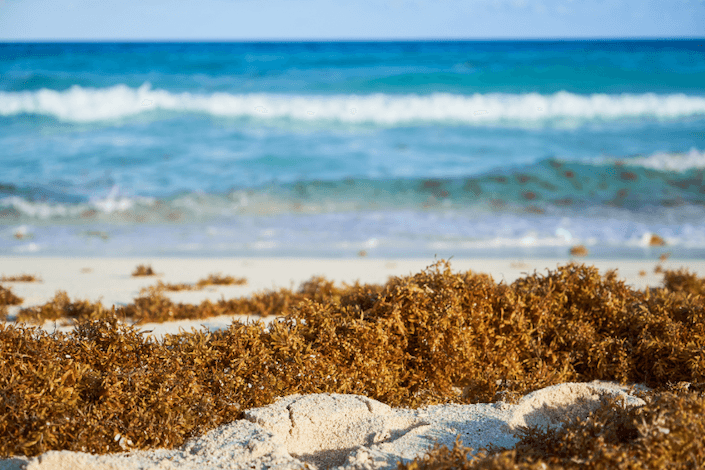
How do you solve a problem like sargassum? Mexico is putting $115 million into a plan to clear its Caribbean shores of the massive mats of free-floating brown algae that have plagued the region's beaches in recent years.
Mexico's new sargassum strategy has two phases. There's an immediate $44 million to scale collection capacity to 1,870 tons daily — a number that shows the scope of the problem — using two large tugboats, six sargaceros (sargassum-harvesting vessels), and roughly 50 kilometres of offshore containment barriers. The second phase, in 2027, will invest the remaining funds into expanding offshore capture networks with large open-water vessels.
Mexico's ultimate goal: daily removal capacity of up to 4,000 tons.
Sargassum isn't a new problem, and it isn't unique to Mexico. Other destinations grappling with it include Barbados, the Dominican Republic, Guadeloupe, Martinique, Anguilla — and southeast Florida, where the algae has become a recurring headache for beach communities from Miami-Dade up through the Treasure Coast. Sargassum used to be a mostly seasonal issue, worst in summer. Now the season can stretch from early in the year through fall.
This isn't Mexico's first investment in fighting the slimy scourge, not by a long shot. For years, resort staff have raked and collected sargassum from beaches by hand. This summer is one of the worst on record. In Quintana Roo — home to Cancun, Tulum and the Riviera Maya — Governor Mara Lezama said dealing with sargassum costs upwards of $2 billion annually, equivalent to 11% of the state's GDP. Last year, Lezama announced plans for a facility to convert the algae into biofuel.
"The effort so far has been titanic, but we have to do more to prevent sargassum from reaching the beaches," said Mexico's president, Claudia Sheinbaum, announcing the National Sargassum Mitigation Plan.
Whatever Mexico is spending, it's worth it. Tourism there is a $30 billion-plus industry, and the U.S. is its largest source market by far. Sargassum coverage and social posts can affect the whole country's image, since the average traveler who sees "sargassum" and "Mexico" together isn't pulling out a map to distinguish the Caribbean coast from the Pacific side. Images of algae piled deep on beaches spread worldwide in an instant.
With this $115 million national plan, Mexico is signaling that it's treating sargassum as something to be actively managed rather than simply reacted to — a shift that could shape how the country's Caribbean coast is perceived heading into future travel seasons.